
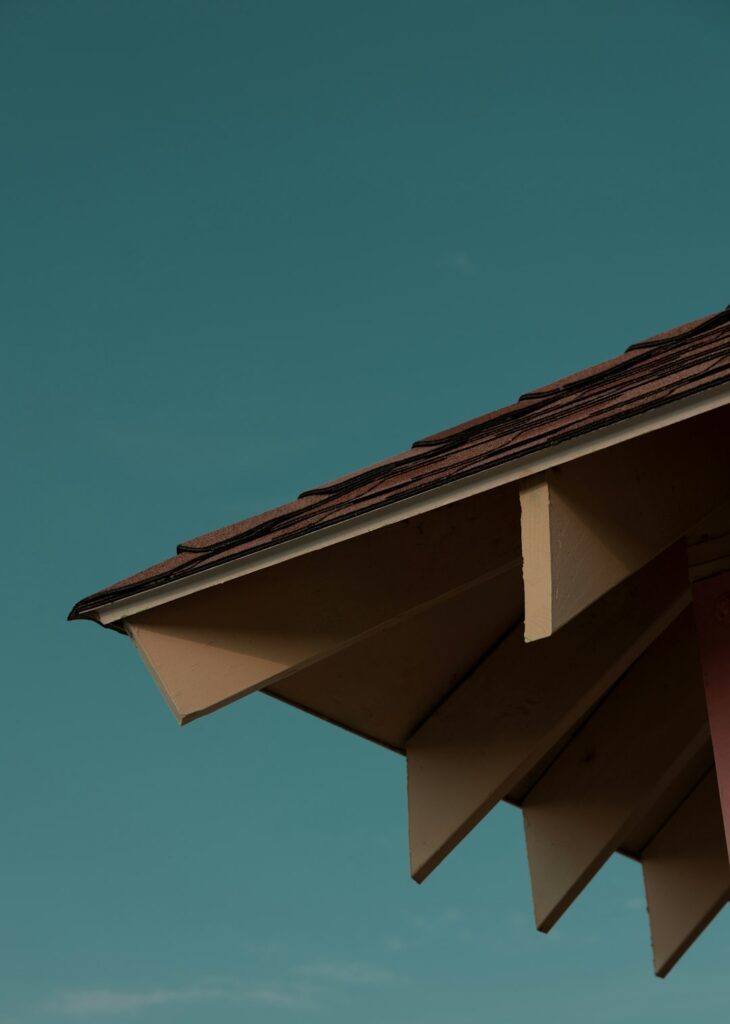
Roof eaves are the lower edges of a sloped roof that extend beyond the exterior walls. They may look like a simple architectural detail, but they help control rainwater, protect siding and foundations, support attic ventilation, and reduce exposure to winter ice and snow.
For homes in Norwich, NY, eaves are especially useful because roofs must handle changing conditions throughout the year, including heavy rain, freeze-thaw cycles, wind, snow, and ice formation.
What do roof eaves do?
Roof eaves serve several connected purposes. Their main job is to move water away from the walls and foundation, but they also help the roof and attic perform properly.
A typical eave may include:
- The roof overhang
- The fascia board along the roof edge
- The soffit beneath the overhang
- Gutters and downspouts
- Intake vents for attic airflow
- Drip-edge flashing along the roof perimeter
The overhang keeps rainfall from dropping directly against siding, windows, doors, and masonry. Without enough projection beyond the wall, water can run down the exterior surface and contribute to staining, rot, peeling paint, or moisture entry around openings.
Eaves also create a transition zone between the roof and the wall. This area must be detailed carefully because it receives runoff, wind-driven rain, snow, and ice at the same time.
How do eaves protect a house from water?
Eaves help direct roof runoff into gutters or away from the wall line. That reduces the amount of water that reaches siding and limits splashback near the foundation.
A properly functioning eave system can help protect:
- Wood siding and trim
- Window and door surrounds
- Exterior paint and coatings
- Foundation walls
- Basement and crawl-space areas
- Soil around the house
The ground below an eave still needs proper drainage. If downspouts discharge next to the foundation, water may collect even when the roof edge is in good condition. Extensions, splash blocks, grading, or other drainage measures may be needed to move water farther away.
Short or missing eaves are not automatically defective. Some homes are designed with minimal overhangs, especially where rooflines meet walls or where architectural styles call for a compact profile. In those cases, flashing, gutters, and wall protection become even more important.
What is the difference between an eave and a soffit?
An eave is the roof edge and overhang. A soffit is the material installed on the underside of that overhang.
Soffits may be made from wood, aluminum, vinyl, or other building materials. A soffit can provide a finished appearance while also enclosing the rafter tails and protecting the underside of the roof from birds, insects, wind, and moisture.
Many soffits contain perforated sections that act as intake vents. These openings allow outdoor air to enter the attic or roof assembly. Air can then move upward toward ridge, gable, or other exhaust vents.
A solid soffit is not necessarily a problem, but the roof must still have an appropriate ventilation strategy. Blocking an originally vented soffit with insulation, paint, debris, or replacement material can interfere with airflow.
Why are eaves important for attic ventilation?
Eave vents are often the starting point for balanced roof ventilation. Cool outdoor air enters near the lower roof edge and warm, moist air exits through higher vents.
This airflow can help control:
- Heat buildup in summer
- Moisture accumulation in winter
- Condensation on roof sheathing
- Premature deterioration of insulation and wood
- Uneven roof temperatures that contribute to ice dams
Ventilation works best when intake and exhaust openings are both available and not obstructed. Insulation should not be pushed tightly into the eave area in a way that blocks the ventilation path. Baffles or air chutes are commonly used to preserve a channel between the soffit vent and the attic space.
A roof can have many vents and still perform poorly if the airflow is unbalanced. For example, adding exhaust vents without enough intake air may reduce the effectiveness of the system or draw air from unintended locations.
Can roof eaves help prevent ice dams?
Eaves do not prevent ice dams by themselves, but they are part of the roof system that must be managed during winter.
An ice dam forms when snow melts on a warmer section of the roof and refreezes near the colder eave. The resulting ice can slow or stop drainage, allowing water to move beneath roofing materials or behind exterior trim.
Good attic insulation, air sealing, and ventilation can help keep the roof surface more uniformly cold. Protective underlayment along the lower roof edge may also be required in areas with a history of ice backup. New York’s residential construction requirements address this type of protection for many sloped roof coverings.
Ice dams can also damage gutters, loosen shingles, stain ceilings, and saturate insulation. Removing ice with a shovel, axe, or other sharp tool can damage roofing and create a fall hazard. Winter roof work should be approached cautiously, particularly when snow or ice is present.
What problems commonly occur at roof eaves?

Because eaves receive water, air, insects, and seasonal movement, they are frequent locations for maintenance problems.
Common warning signs include:
- Sagging or detached gutters
- Rusted or missing gutter fasteners
- Soft or discolored fascia boards
- Peeling paint beneath the overhang
- Staining on soffits
- Blocked or damaged soffit vents
- Bird or insect entry
- Water marks near exterior walls
- Shingle edges that curl or appear loose
- Ice buildup along the lower roof edge
Some problems begin above the eave rather than within it. A leaking roof valley, damaged flashing, or failed plumbing vent may send water into the eave area, making the fascia or soffit appear to be the source when it is only where the water becomes visible.
How should homeowners inspect roof eaves safely?
A ground-level inspection can reveal many problems without climbing onto the roof. Look along the roofline after rainfall and check whether water flows through the gutters or spills over the front and sides.
Useful observations include:
- Whether gutters remain straight and securely attached
- Whether water stains appear below the roof edge
- Whether soffit panels are cracked, loose, or missing
- Whether ventilation openings are covered
- Whether plants or debris are growing from gutters
- Whether downspouts discharge near the foundation
- Whether winter ice forms repeatedly in the same locations
Binoculars can help with higher roof edges. A ladder should never be placed on unstable ground, icy surfaces, or against unsupported gutters. Roof access becomes more hazardous during wet, windy, or freezing conditions.
Do older homes in Norwich need special attention at the eaves?
Older homes may have a mixture of original construction and later repairs. Eaves may include older wood soffits, multiple layers of roofing, undersized gutters, or ventilation arrangements that no longer match the insulation system.
Past alterations can also create hidden problems. A replacement roof may extend over older fascia, a remodeled attic may cover intake vents, or added insulation may block airflow at the perimeter. Historic trim may be sound but require different repair methods than modern manufactured soffit materials.
Seasonal observation is useful. If the same section of eave develops staining, gutter overflow, or ice buildup year after year, the pattern may point to a recurring drainage, ventilation, insulation, or flashing issue rather than a one-time weather event.
The roof eave is a small part of the building, but it connects several major systems: roofing, gutters, attic ventilation, exterior walls, and foundation drainage. Keeping that connection clear and functional helps a home manage water and seasonal weather more effectively.
