
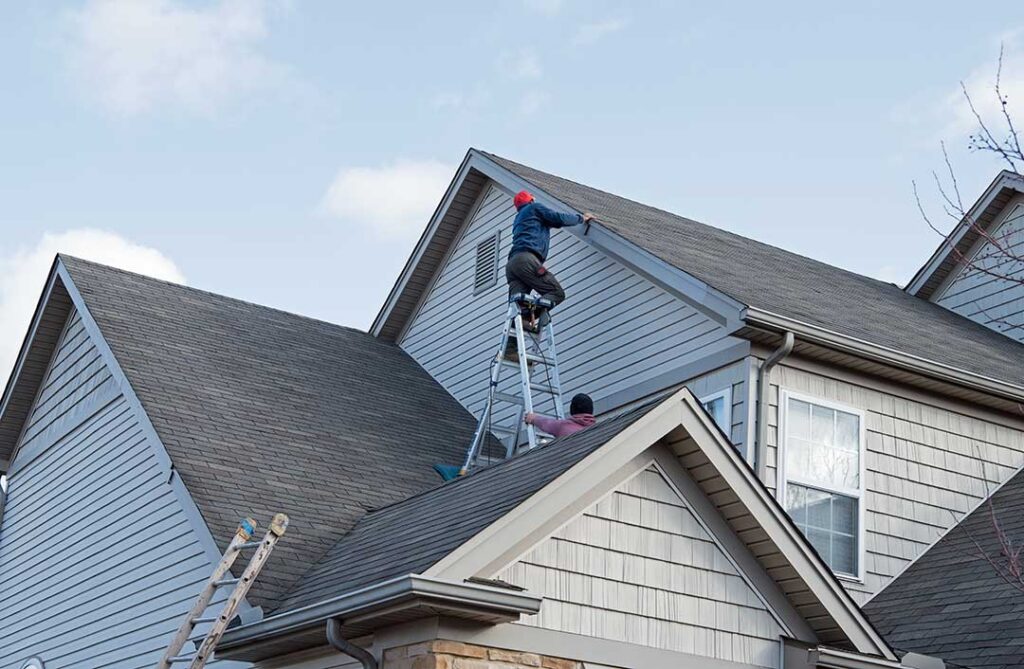
Gutters are part of the roof’s water-management system. They collect runoff from the roof edge and direct it away from shingles, fascia, walls, windows, and the foundation. When leaves, twigs, roof grit, or ice block that path, water can remain near vulnerable roof edges or spill against the house.
For homes in Norwich, NY, regular gutter cleaning is especially useful because the roof must handle changing conditions through the year, including heavy rain, falling leaves, freeze-thaw cycles, and snow. Keeping gutters clear does not prevent every roofing problem, but it reduces several common sources of water damage.
How can clogged gutters damage a roof?
Clogged gutters can cause water to back up beneath the lower edge of roofing materials. Instead of moving into the gutter and downspout, runoff may sit against the fascia board, drip behind the gutter, or flow over the edge.
Over time, this can contribute to:
- Rot in fascia boards and roof-edge framing
- Water staining or deterioration beneath the eaves
- Damaged soffits and exterior trim
- Loose or deteriorated gutter fasteners
- Wet insulation near the roof perimeter
- Leaks that appear inside walls or ceilings
The roof edge is particularly exposed because it receives runoff from the entire roof slope. A blockage at one point can affect a larger section of the drainage system than the visible pile of debris suggests.
Roofing materials can also shed small amounts of mineral granules as they age. Those granules collect in gutters along with organic debris. A moderate amount is normal, but unusually heavy accumulation may be worth documenting because it can indicate roof wear rather than a gutter problem alone.
Why does gutter cleaning matter during the winter?
Clear gutters cannot eliminate ice dams, but blocked drainage can make winter water problems worse. An ice dam forms when melting snow refreezes near the colder roof edge, often around the eave or gutter. Water held behind the ice may seek gaps beneath shingles or at roof-edge details.
New York’s residential code addresses roof areas with a history of ice formation by requiring an ice barrier in specified conditions. That requirement reflects the risk of water backup at the lower roof edge, but an ice barrier is not a substitute for sound drainage, insulation, ventilation, and maintenance. ([codes.iccsafe.org](https://codes.iccsafe.org/content/NYSRC2025P1/chapter-9-roof-assemblies?utm_source=openai))
Debris-filled gutters may:
- Hold meltwater against the roof edge
- Freeze into heavier, uneven masses
- Prevent downspouts from carrying water away
- Add weight to gutters and their attachments
- Make it harder to see whether drainage is working
Ice dams are not caused by dirty gutters alone. Heat escaping through the roof, inadequate insulation, air leakage, roof shape, weather patterns, and snow cover also matter. Cleaning helps remove one contributing factor without pretending to solve the entire ice-dam problem.
How often should residents clean their gutters?
Many houses need cleaning at least twice a year: once after most autumn leaves have fallen and again in spring. The right schedule depends on the property.
More frequent attention may be appropriate when a home has:
- Mature trees overhanging the roof
- Pine needles or seed-producing trees nearby
- Several roof levels that shed debris onto lower sections
- A steep roof or complicated roof valleys
- Gutter guards that still allow fine material to collect
- Previous overflow, sagging, or downspout blockages
A visual check after a major windstorm or heavy rain can also be useful. Water pouring over the front edge, overflowing at a seam, or forming puddles near the foundation indicates that the drainage system needs attention.
Cleaning should not be limited to the horizontal gutter. Downspout openings, elbows, extensions, and outlets can block even when the gutter itself looks relatively clear.
What should a basic gutter inspection include?
A useful inspection looks for both blockage and damage. Clearing debris is only part of the task.
Check whether:
- Water flows continuously through the downspout
- Gutter sections are pulling away from the fascia
- The gutter slopes toward the downspout
- Seams or end caps are leaking
- Downspouts discharge far enough from the foundation
- Water is staining siding beneath the roof edge
- Shingles near the eave appear lifted, darkened, or deteriorated
- The fascia or soffit feels soft or shows discoloration
- Splashing or erosion is occurring below the downspout

The best time to observe drainage is during or shortly after rain. Dry-weather inspections can reveal debris and damage, but they cannot show whether water is actually moving through the system as intended.
Can gutter guards eliminate the need for cleaning?
No. Gutter guards can reduce the amount of large debris entering a gutter, but they do not make the system maintenance-free. Fine particles, shingle granules, seeds, and decomposed organic material may still accumulate. Some covers can also collect leaves on top or allow debris to gather at edges and valleys.
A covered gutter should still be inspected periodically. The inspection should include the surface of the guard, the channel beneath it, the downspout entrance, and the fasteners that hold the system in place.
The useful question is not whether a gutter has a cover. It is whether rainwater can move freely from the roof to a safe discharge point.
Is overflowing water always a gutter problem?
Not necessarily. Overflow may result from a clogged gutter, but other causes include an undersized gutter, a blocked downspout, poor slope, a damaged seam, roof valleys discharging too quickly, or water flowing behind the gutter because of an edge or flashing detail.
In some cases, the roof itself is directing unusually large amounts of water into one short gutter section. That can happen where multiple roof slopes meet or where a higher roof drains onto a lower one.
This distinction matters because repeatedly cleaning a gutter will not correct a drainage design or roof-edge problem. If overflow continues after the channel and downspout are clear, the surrounding roof and attachment details should be examined rather than assuming more frequent cleaning is the answer.
When is gutter cleaning unsafe to do personally?
Gutter cleaning becomes a safety issue on steep roofs, high walls, wet surfaces, icy ground, or homes where ladders cannot be placed securely. Reaching sideways from a ladder, standing on a roof edge, or trying to break apart ice can lead to falls and roof damage.
Extra caution is warranted when:
- Snow or ice is present
- Power lines are near the work area
- The roof has multiple levels or limited footing
- Gutters are above a porch, addition, or stairway
- The fascia appears rotten or unable to support a ladder
- A ladder would need to rest against the gutter
A ground-based inspection can still identify overflow, damaged downspouts, and visible staining. Work at height or ice removal may require appropriate safety equipment and experience.
Regular gutter cleaning is therefore a small part of roof maintenance with a larger purpose: keeping water moving away from the roof edge and the house. For local homes facing seasonal rain, leaf fall, and winter freeze-thaw conditions, a clear drainage path makes it easier to spot roof-edge defects early and reduces avoidable moisture stress on the roofing system.
